
Top 5 AI Trading Bots for the 2026 Stock Market
The convergence of artificial intelligence and financial markets has reached a critical inflection point in 2026. What was once considered experimental, algorithmic retail trading powered by machine learning, is now rapidly becoming a mainstream strategy for both retail investors and sophisticated portfolio managers. AI trading bots are no longer just tools for executing trades; they have evolved into intelligent systems capable of analysing macroeconomic signals, interpreting sentiment from unstructured data, and dynamically adapting strategies based on real-time market conditions. For investors focused on building passive income streams or enhancing portfolio efficiency, AI trading bots represent one of the most compelling opportunities in today’s financial landscape.
At a structural level, the advantage of AI trading bots lies in their ability to eliminate emotional bias, process vast datasets at scale, and execute trades with precision timing that human traders simply cannot match. However, not all AI trading bots are created equal. The differentiation in 2026 comes down to data ingestion capabilities, model sophistication, execution latency, and risk management frameworks.
In this article, we will break down the top five AI trading bots currently shaping the stock market ecosystem, while also analyzing their strategic positioning, strengths, and potential limitations from an investor’s perspective.
1. Trade Ideas (HOLLY AI)
Trade Ideas remains one of the most established AI trading platforms in the market, and its flagship AI system, HOLLY, continues to evolve with increasingly sophisticated predictive capabilities. Unlike conventional bots that rely heavily on static indicators, HOLLY operates through thousands of backtested strategies, dynamically selecting the highest-probability setups based on current market conditions. Its edge lies in continuous simulation, where it runs multiple market scenarios overnight to optimize trading strategies before the market opens.
Trade Ideas stands out due to its long-standing track record and transparency in strategy performance. The platform provides detailed analytics, allowing users to assess risk-adjusted returns rather than relying on superficial win-rate metrics. For intermediate to advanced traders, HOLLY serves as both an execution engine and a research tool, bridging the gap between discretionary and fully automated trading.
📊 2. TrendSpider (AI-Powered Technical Automation)
TrendSpider has carved out a unique niche by focusing on automated technical analysis powered by AI. In 2026, its platform has expanded beyond charting into full-scale strategy automation, enabling users to design, test, and deploy trading strategies without requiring deep coding expertise. Its machine learning models specialize in identifying trendlines, support/resistance levels, and pattern recognition with a degree of consistency that surpasses manual analysis.
What makes TrendSpider particularly compelling is its ability to integrate multiple data layers, including price action, volume, and alternative datasets, into a unified analytical framework. This allows traders to construct highly nuanced strategies that adapt to different market regimes. For investors who value technical precision and data-driven decision-making, TrendSpider offers a robust and scalable solution that aligns well with long-term portfolio optimization.
⚙️ 3. Kavout (AI Stock Ranking Engine)
Kavout differentiates itself through its proprietary “Kai Score,” an AI-driven ranking system that evaluates stocks based on a wide range of quantitative and qualitative factors. Rather than functioning purely as a trading bot, Kavout operates as an intelligence layer that enhances stock selection, making it particularly useful for investors who prefer semi-automated strategies.
The strength of Kavout lies in its multi-factor modeling approach, which incorporates fundamentals, technical indicators, and market sentiment into a single predictive framework. In 2026, the platform has further refined its machine learning algorithms to improve predictive accuracy, especially in volatile market environments. For long-term investors, Kavout serves as a powerful tool for identifying high-conviction opportunities while minimizing exposure to underperforming assets.
🚀 4. MetaTrader + AI Plugins (Custom AI Trading Systems)
MetaTrader remains a dominant force in the trading ecosystem, but its true potential in 2026 lies in its integration with AI-driven plugins and custom algorithms. By leveraging third-party AI modules, traders can build highly customized trading systems tailored to their specific risk tolerance, asset preferences, and market outlook.
The flexibility of MetaTrader is both its greatest strength and its primary challenge. While it allows for unparalleled customization, it also requires a higher level of expertise to fully utilize its capabilities. Advanced users can integrate natural language processing models, sentiment analysis tools, and reinforcement learning algorithms to create adaptive trading strategies that evolve over time. For technically inclined investors, MetaTrader represents a sandbox environment where cutting-edge AI trading concepts can be deployed and refined.
🧠 5. Tickeron (AI Pattern Recognition Engine)
Tickeron has gained significant traction due to its focus on AI-driven pattern recognition and predictive analytics. The platform uses deep learning models to identify recurring market patterns and generate actionable trading signals with probabilistic confidence levels. In 2026, Tickeron’s AI has become more sophisticated in detecting complex formations, including multi-timeframe patterns that are often overlooked by traditional analysis.
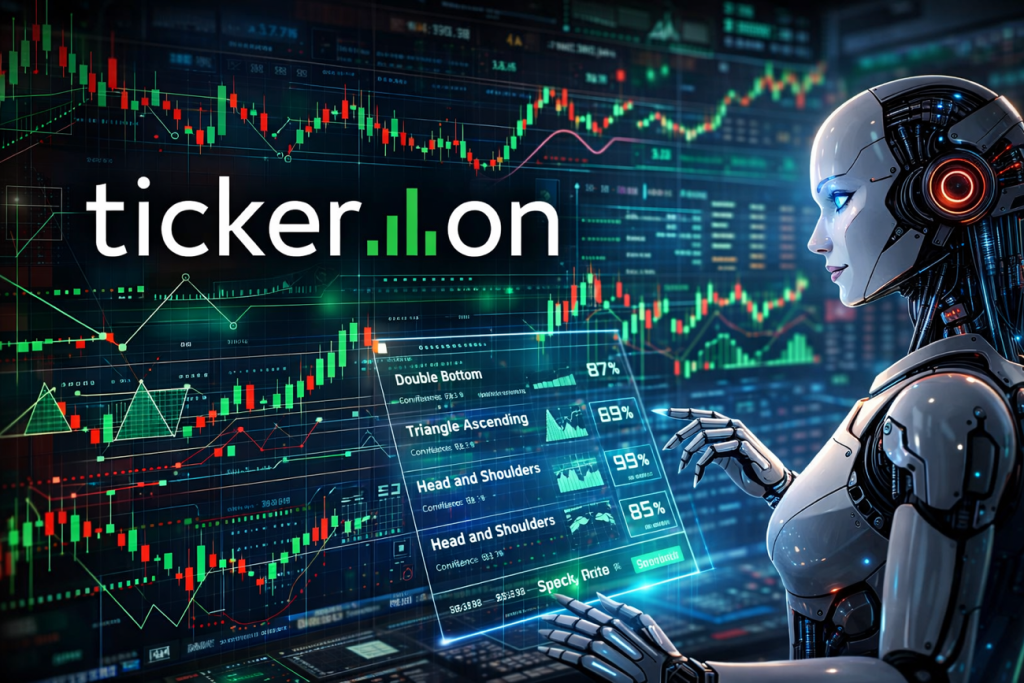
One of Tickeron’s key advantages is its emphasis on explainability. Unlike black-box models that provide little insight into decision-making processes, Tickeron offers detailed breakdowns of why a particular signal is generated. This transparency enhances user trust and aligns with best practices in AI-driven financial systems. For traders seeking a balance between automation and interpretability, Tickeron provides a compelling value proposition.
⚠️ Key Considerations Before Using AI Trading Bots
While AI trading bots offer significant advantages, they are not a guaranteed path to profits. Investors must approach these tools with a clear understanding of their limitations and inherent risks.
- Market Regime Dependency: AI models trained on historical data may struggle during unprecedented market conditions or structural shifts.
- Overfitting Risk: Some bots may perform exceptionally well in backtests but fail to generalize in live trading environments.
- Execution Costs: Frequent trading can lead to higher transaction costs, which may erode profitability over time.
- Data Quality: The effectiveness of AI models is directly tied to the quality and diversity of input data.
A disciplined approach, combining AI insights with sound risk management and portfolio diversification, remains essential for long-term success.
📈 Strategic Perspective: Are AI Trading Bots Worth It in 2026?
From a macro perspective, AI trading bots are not just a trend, they are part of a broader structural transformation in financial markets. Institutional players have been leveraging algorithmic trading for decades, and the democratization of AI tools is now leveling the playing field for retail investors. However, the true value of these bots lies not in blind automation, but in augmentation, enhancing human decision-making rather than replacing it entirely.
For passive income seekers, AI trading bots can serve as a scalable mechanism to generate returns with minimal day-to-day involvement. However, expectations must be calibrated realistically. Consistent, risk-adjusted returns are far more valuable than chasing high but volatile gains. The most successful users of AI trading bots in 2026 are those who treat them as components of a broader investment strategy, integrating them with fundamental analysis, macro awareness, and disciplined capital allocation.
🧩 Final Thoughts
The landscape of AI trading bots in 2026 is defined by rapid innovation, increasing accessibility, and growing sophistication. Platforms like Trade Ideas, TrendSpider, Kavout, MetaTrader, and Tickeron each offer unique capabilities that cater to different investor profiles, from beginners to advanced quants. The key to success lies in selecting the right tool based on your objectives, risk tolerance, and level of expertise.
Ultimately, AI trading bots are not a shortcut to wealth, but they are a powerful lever. When used strategically, they can enhance efficiency, reduce emotional bias, and unlock new opportunities in the stock market. As the technology continues to evolve, investors who understand and adapt to these tools will be better positioned to navigate the complexities of modern financial markets and build sustainable passive income streams.
📌 Frequently Asked Questions (FAQ)
1. Are AI trading bots legal in 2026?
Yes, AI trading bots are legal in most countries, including the U.S., UK, and Singapore. However, they must comply with financial regulations, broker policies, and market rules. Always ensure your bot operates through a regulated brokerage and follows local compliance requirements.
2. Can AI trading bots really make passive income?
AI trading bots can generate passive income, but they are not guaranteed profit machines. Their performance depends on market conditions, strategy quality, and risk management. The most effective approach is to use bots as part of a diversified investment strategy rather than relying on them entirely.
3. What is the best AI trading bot for beginners?
For beginners, platforms like Trade Ideas and TrendSpider are often recommended due to their user-friendly interfaces and built-in AI tools. They provide automated insights without requiring deep coding or quantitative trading experience.
4. Are AI trading bots better than human traders?
AI trading bots outperform humans in speed, data processing, and emotional discipline. However, human oversight is still essential for strategy validation, macro awareness, and risk control. The best results typically come from a hybrid approach.
5. What are the risks of using AI trading bots?
Key risks include overfitting, market regime changes, technical failures, and excessive trading costs. Poorly configured bots can amplify losses just as quickly as they generate gains. Risk management and continuous monitoring are critical.
6. Do AI trading bots work in volatile markets?
Some advanced AI bots adapt well to volatility by adjusting strategies dynamically. However, extreme or unprecedented market conditions can still reduce their effectiveness. Not all bots are designed for high-volatility environments.
Sources
- U.S. CFTC, Customer Advisory: AI Won’t Turn Trading Bots into Money Machines
- U.S. SEC Investor.gov, Artificial Intelligence (AI) and Investment Fraud: Investor Alert
- FINRA, Artificial Intelligence (AI) and Investment Fraud
- Trade Ideas, Trade Ideas
- TrendSpider, TrendSpider
- Kavout, Kavout
- Tickeron, Tickeron
- MetaQuotes, MetaTrader 5
Disclaimer: This article is for educational purposes only and does not constitute investment advice. Crypto assets and leveraged trading carry a high risk of loss. Investors should conduct their own due diligence before making any financial decisions. We are not responsible for any investment losses incurred based on the information provided in this article.