
Nasdaq 23-Hour Trading: What the New Overnight Session Means
Nasdaq 23-Hour Trading: What the New Overnight Session Means
For decades, investors have treated the US stock market as a daytime market. That assumption is about to age badly. Nasdaq is scheduled to introduce a 23-hour, five-day trading structure, adding a new overnight session from 9:00 p.m. to 4:00 a.m. ET.
The status matters, so here it is plainly. The SEC approved Nasdaq’s 23/5 rule change on 10 April 2026. Nasdaq has set Sunday, 6 December 2026 as the effective date for the new hours. The launch is still conditional: before the overnight session can open, the consolidated market data system must be ready to run through the night, and Nasdaq must file a further rule change confirming it. As of mid-September 2026, that work was still in progress.
The change reaches almost everyone who owns US shares, including investors outside the United States whose working day falls while New York sleeps. This article explains exactly what is changing, why now, who benefits, what could go wrong, and what it means for how you invest.
1. Key Facts at a Glance
| Item | Detail |
|---|---|
| What is changing | Nasdaq extends trading from 16 to 23 hours a day, five days a week |
| Decided by | SEC order approving Nasdaq rule change SR-NASDAQ-2025-109 (Release 34-105199) |
| Current status | Approved, not yet live |
| Approval date | 10 April 2026 |
| Target effective date | Sunday, 6 December 2026 |
| Remaining conditions | Market data (SIP) readiness and a confirming Nasdaq rule filing |
| Who it applies to | NMS stocks and exchange traded products on Nasdaq |
| New session | Night Session, 9:00 p.m. to 4:00 a.m. ET |
| Primary source | SEC Release 34-105199; Nasdaq Equity Trader Alert 2026-46 |
Status as of 18 September 2026. Rule changes can be delayed or amended, verify before acting.
2. What Is 23-Hour Stock Trading?
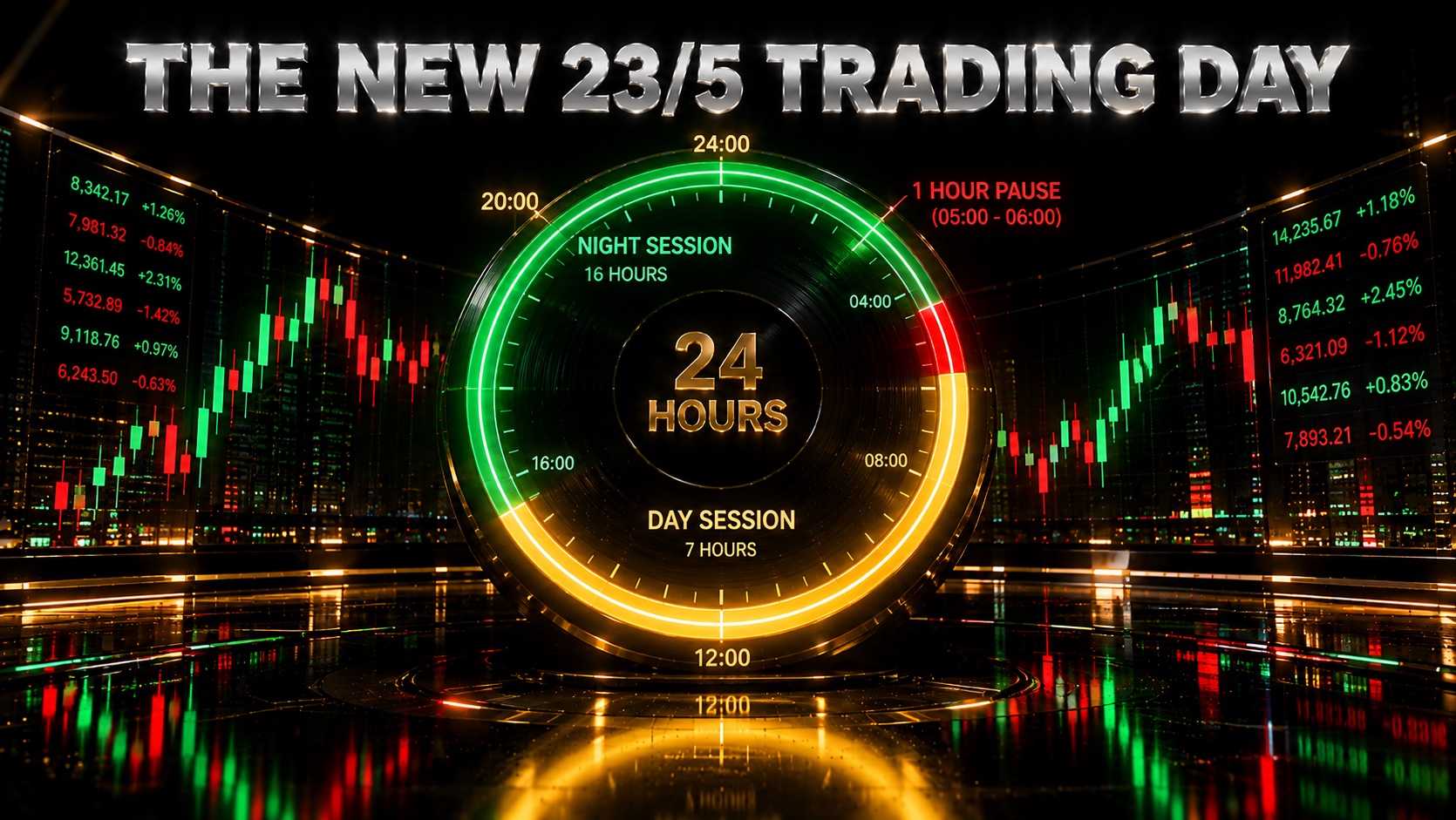
“23/5” means trading for 23 hours a day, five days a week. It does not mean the market never closes. Nasdaq will stop for one hour every weekday evening and will stay shut over the weekend.
In practice, Nasdaq is collapsing three sessions into two. Pre-market, regular and after-hours become a single Day Session from 4:00 a.m. to 8:00 p.m. ET, substantively unchanged. A new Night Session then runs from 9:00 p.m. to 4:00 a.m. ET. The hour in between is a scheduled pause for maintenance, testing and processing corporate actions such as dividends and stock splits.
The regular 9:30 a.m. to 4:00 p.m. ET session remains the core US equity trading period. The opening and closing auctions that set the official open and close prices still happen inside it, exactly as they do today.
3. The New Nasdaq Trading Schedule: Today vs December
| Time (ET) | Today | After the change |
|---|---|---|
| 4:00 a.m. to 9:30 a.m. | Pre-market | Day Session |
| 9:30 a.m. to 4:00 p.m. | Regular session | Day Session (core hours unchanged) |
| 4:00 p.m. to 8:00 p.m. | After-hours | Day Session |
| 8:00 p.m. to 9:00 p.m. | Closed | Daily one-hour pause |
| 9:00 p.m. to 4:00 a.m. | Closed | New Night Session |
The trading week will open with a Night Session at 9:00 p.m. ET on Sunday and close at 8:00 p.m. ET on Friday. That is why the structure is described as 23/5 rather than 24/7.
One detail will surprise people. A trade executed between 9:00 p.m. and midnight ET carries the next trading day’s trade date, because the Night Session is treated as the start of the following day. Trades after midnight carry that same calendar day’s date.
4. Why US Exchanges Are Extending Trading Hours
Nasdaq’s own filing is candid about the motive. It describes growing interest in overnight trading, particularly among investors in Asia and other regions whose business hours do not overlap with the US session, and who find Nasdaq closed when they are most likely to trade. Those investors have been turning to alternative trading systems (ATSs, privately run venues that are not exchanges) that already offer overnight trading. The filing names Blue Ocean, Bruce, Interactive Brokers and OTC Moon.
The pressures behind the move:
- Global ownership. Foreign investors held about $16.9 trillion of US equities at the end of June 2024, according to the US Treasury’s annual survey.
- Lost order flow. Every overnight trade on an ATS is a trade the exchange does not see.
- 24/7 competition. Crypto markets never close, and tokenized versions of US stocks now trade outside exchange hours.
- News does not keep office hours. Earnings abroad, geopolitical shocks and central bank decisions land at all times.
Resistance came through the comment process. Critics argued that thin overnight markets expose retail investors to poor prices, and one warned that the hours when trading stops provide a “vital cooling-off period” to digest news. Nasdaq replied that the SEC had already weighed those concerns in approving similar proposals.
5. Why This Is More Than a Nasdaq Decision
Nasdaq is not acting alone. The SEC approved NYSE Arca’s proposal to extend trading in February 2025, and approved the newer exchange 24X in late 2024. NYSE Arca now plans a nearly identical 23-hour structure, with its own overnight session from 9:00 p.m. to 4:00 a.m., and it also targets 6 December 2026. So this is an industry-wide shift in market structure, not a single exchange experimenting.
Changing the clock at one exchange is the easy part. The shared plumbing has to change too:
- Market data. The Securities Information Processors (SIPs) combine quotes and trades from every venue into the one national price feed. The SEC order bars Nasdaq from opening the Night Session until the plans that run them confirm they are ready.
- Clearing and settlement. At the SEC’s 17 September 2026 roundtable on 24-hour trading, Chairman Paul Atkins said “DTCC has gone live with 23 by 5 trade-capture systems.”
- Volatility controls. The Limit Up-Limit Down plan, which pauses stocks that move too far too fast, has been amended to add static overnight price bands of 20% around a reference price.
Atkins also said work on the SIP plans “is ongoing,” which makes it the practical gating item to watch before December.
6. What Happens During the Overnight Session?
The Night Session is not simply the regular session moved into the dark. It has deliberately tighter rules:
- Limit orders only. Market orders and other unpriced orders, including pegged orders, are not permitted.
- No opening auction at 9:00 p.m. Trading simply begins on a continuous basis.
- Orders do not roll over. Any order still open at 4:00 a.m. ET is cancelled, as is anything left on the book at 8:00 p.m. ET.
- Price protection. Limit orders priced too far from the market are rejected.
- Halts still apply. If a stock’s primary listing market halts it, Nasdaq halts it overnight too.
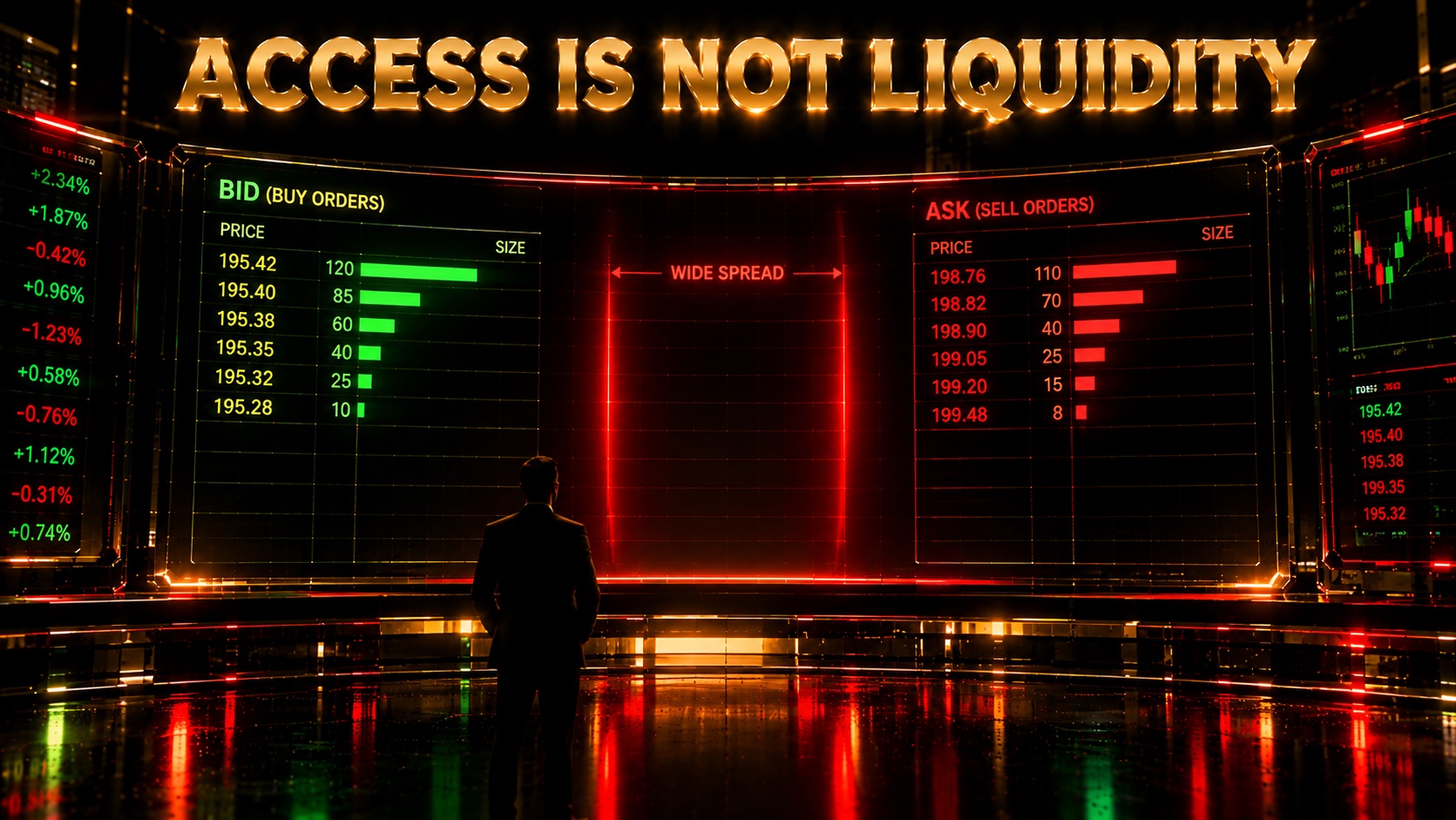
This is the single most important idea in this article, and the one most coverage gets wrong. Market access is not liquidity, and liquidity is not execution quality. Being able to place an order at 2:00 a.m. says nothing about how many people are on the other side of it.
Nasdaq’s own filing acknowledges that extended-hours volume “tends to be considerably lower” than during regular hours. With fewer participants, order books are thinner and the bid-ask spread (the gap between the best buy and sell prices) tends to be wider. That spread is a real cost on every round trip, the same mechanic explained in our guide to how spreads and pips affect trading profits. An overnight price can also reflect a small group’s view rather than the consensus the regular session produces.
Brokers must disclose these risks. The SEC order adds Night Session warnings, including that the primary listing market may not be open to supervise trading and that other infrastructure may be closed, which can delay settlement.
7. Who Benefits, Who Is Worse Off
The effects fall unevenly across market participants.
Retail investors can react to overnight news on a regulated exchange rather than only on ATSs. The honest read is that they also gain more chances to trade at poor prices in thin markets.
Brokers decide whether to offer the session, which stocks to allow and which order types, and they carry the cost of overnight staffing. Robinhood’s 24 Hour Market is already a well-known retail product built around overnight trading, a theme explored in our Robinhood (HOOD) business model analysis.
Market makers carry more inventory risk when few counterparties are active, and respond with wider quotes that retail investors pay for.
Exchanges compete to recapture volume lost to ATSs. Nasdaq, Inc. (NDAQ) and Intercontinental Exchange (ICE), owner of NYSE Arca, are the listed read-throughs, though whether overnight volume becomes a meaningful revenue line is unproven.
Institutions and funds face more operational load, from surveillance to corporate actions.
Overseas investors are the clearest intended beneficiaries, as Section 9 explains.
8. What Could Go Wrong
Longer hours bring structural risks that an announcement does not dwell on:
- Thin liquidity. Fewer participants and less depth in the order book.
- Wider spreads. Less competition to fill your order raises its cost.
- Sharp moves on news. Unexpected headlines during a thin session can move prices violently.
- Weaker price discovery. An overnight price may not reflect the regular session consensus.
- Overtrading. A market that is almost always open invites more frequent trading.
- Operational strain. Brokers, clearing firms and data providers must all run reliably through the night.
There is already a real example of that last risk. On 5 August 2024, during a global sell-off, overnight venue Blue Ocean ATS hit capacity problems, cancelled trades executed between roughly 1:45 a.m. and 3:06 a.m. ET, and suspended trading. Overnight markets are tested hardest precisely when investors most want to use them.
9. What 23/5 Means for Global Investors
The key concept is that US equities increasingly behave as a global asset class, while traditional exchange hours were built around a US-centred market. The Night Session is where that mismatch gets partially fixed.
Converted to local time in December, when New York is on standard time (UTC minus 5):
- Singapore and Hong Kong: the Night Session runs from 10:00 a.m. to 5:00 p.m. local time, squarely inside the business day.
- Dubai: 6:00 a.m. to 1:00 p.m.
- Central Europe: 3:00 a.m. to 10:00 a.m., though European investors already reach much of the existing pre-market from late morning.
For an investor in Singapore, US stocks can trade on a national exchange during office hours, and news released after the 4:00 p.m. ET close can be priced during Asian hours. What it does not mean is that Asian daytime liquidity will match New York’s. Most US institutional trading will still happen in the regular session.

10. Does 23-Hour Trading Mean 24/7 Markets?
No. Nasdaq will pause every weekday from 8:00 p.m. to 9:00 p.m. ET and stay closed from Friday 8:00 p.m. until Sunday 9:00 p.m. ET.
Crypto is the natural comparison, but the analogy should not be pushed too far. US equities are not “becoming crypto.” Exchanges are adopting part of the always-available model while keeping securities regulation, consolidated market data, surveillance and scheduled maintenance windows. The truly 24/7 version of US stocks is happening elsewhere, through tokenized shares, which carry their own legal questions, as our coverage of Robinhood’s stock tokens and Ondo’s tokenized stock platform explains.
11. Historical Precedent and the Bigger Transformation
The path runs from a fixed daytime session, to extended pre-market and after-hours trading, to near-continuous markets. Each step widened access without moving the centre of gravity: pre-market and after-hours trading remain markedly less liquid than the regular session, which still hosts the auctions and most of the volume. Overnight trading in US stocks also already exists on ATSs, and the August 2024 Blue Ocean cancellation showed how fragile a single overnight venue can be under stress.
Where the analogy breaks down is scale. An exchange session feeding the national market data system, with price bands and coordinated halts, is sturdier than one private venue. Whether that produces genuinely deeper liquidity is the open question, and nobody can answer it before December.
12. What This Means for Your Portfolio
For a long-term investor, the honest answer is that very little needs to change, and that is worth saying clearly:
- Nothing forces you to trade overnight.
- Earnings reactions may arrive sooner. A stock reporting after the close may reprice overnight.
- Check your broker before December. Ask whether it will offer the Night Session, which stocks, which order types, and whether it can block overnight execution entirely.
- Use limit orders if you do participate. The exchange requires them overnight anyway, for good reason.
- Do not conclude that more hours mean better opportunities. More hours create more opportunities to transact. Valuation, fundamentals, liquidity and spreads decide whether any of them is a good investment.
13. The Case For and Against
🐂 The Case That This Is Genuinely Good
- Overseas investors get exchange access during their own business hours.
- Overnight trading moves from private venues onto a regulated exchange with consolidated data.
- Price bands, halts and mandatory risk disclosures give retail investors more protection than some ATSs offer.
🐻 The Case That This Is Oversold or Harmful
- Access does not create liquidity, and thin books mean wider spreads for retail investors.
- Overnight prices may not reflect genuine market consensus.
- Near-continuous markets remove the “cooling-off” period.
- Overnight infrastructure is untested at exchange scale, as the 2024 Blue Ocean failure showed at venue scale.
14. Final Verdict
What actually changes is simple. From 6 December 2026, if the remaining conditions are met, Nasdaq will trade US stocks from Sunday night to Friday night with only a one-hour daily pause.
What most coverage gets wrong is the idea that more hours means a better market. It means more access. Night Session liquidity is still unknown, and the regular session will remain where prices are truly set. The date to watch is Nasdaq’s confirming filing on SIP readiness ahead of 6 December.
For ongoing coverage of market structure changes, subscribe to OneMoreStock on YouTube.
FAQ
When does Nasdaq 23-hour trading start?
Nasdaq has set Sunday, 6 December 2026 as the effective date. The SEC approved the rule change on 10 April 2026, but the Night Session cannot open until the market data plans confirm they are ready and Nasdaq files a confirming rule change. The date could move if that work slips.
Will US stocks trade 24/7?
No. The market will pause for one hour every weekday evening and close from Friday 8:00 p.m. ET until Sunday 9:00 p.m. ET. That is why it is called 23/5.
Can I use market orders in the overnight session?
No. Only limit orders are accepted in the Night Session, and market, pegged and other unpriced orders are not permitted. Orders still open at 4:00 a.m. ET are cancelled rather than carried into the Day Session.
Is overnight trading as liquid as regular hours?
No, and you should not assume it will be. Nasdaq itself notes that extended-hours volume is considerably lower than in regular hours, which usually means thinner order books, wider spreads and sharper moves on news.
Does 23-hour trading affect long-term investors?
Mostly not. Nothing requires you to trade overnight. The main practical change is that prices can react to after-hours news before the next regular session opens.
Financial Disclaimer:
This article is for educational and informational purposes only and should not be considered financial or investment advice. Investing involves risk, including the possible loss of capital. Always conduct your own research and consult a qualified financial adviser before making investment decisions.