Standard Chartered Crypto Trading in the UAE: Binance Rival?

Standard Chartered Crypto Trading in the UAE: Binance Rival?
In mid-October 2026, Standard Chartered opened spot Bitcoin and Ether trading to wealth clients in the UAE, with approval from Dubai’s Virtual Assets Regulatory Authority (VARA). Eligible clients can now buy and sell both assets straight from their existing bank accounts, with no separate wallet and no account at a crypto exchange.
The bank calls it the first such service for the group anywhere in the world, and the first by an international bank in the UAE. That raises an obvious question for anyone who already holds crypto on an exchange: is a global bank now coming for Binance’s customers? This article explains how the service works, what it gives up in exchange for its safety features, and why the honest answer is mostly no, at least for now.
1. Why Standard Chartered Crypto Trading Matters Now
Banks have offered crypto exposure for years, but almost always indirectly, through ETFs, structured notes or derivatives. What changed here is direct ownership: the client holds actual Bitcoin and Ether, held and settled by the bank itself, inside the same relationship that holds their cash and investments.
The timing is also telling. The launch landed in a weak week for crypto prices. On 14 October, a hotter than expected US core inflation print pushed Bitcoin below $82,000, according to The Block, and the sell-off triggered close to $1 billion in liquidations across crypto markets. A bank rolling out direct crypto access into that kind of tape signals that this is a long-term product decision, not a reaction to a rally.
Key Facts at a Glance
| Item | Detail |
|---|---|
| Provider | Standard Chartered |
| Announced | Mid-October 2026 (covered from 14 to 15 October) |
| Regulator | Dubai’s Virtual Assets Regulatory Authority (VARA) |
| Assets | Bitcoin (BTC) and Ether (ETH) only |
| Who can use it | Clients classed as Professional Investors in the UAE |
| How clients trade | Through existing Standard Chartered accounts |
| Custody and settlement | Handled by the bank in a closed-loop model |
| Partner | Zodia Markets, backed by SC Ventures |
| Fees, spreads, minimums | Not disclosed |
| Other markets | Planned “over time”, no timetable or countries named |
Data as of 20 October 2026. Verify before publishing.
2. What Standard Chartered Actually Launched
The service combines two divisions of the bank, Wealth and Retail Banking and Corporate and Investment Banking, and works with Zodia Markets, a digital asset brokerage backed by the group’s venture arm, SC Ventures. The bank has not published a breakdown of which party performs which function, so the safest reading is the one it gave: trades run on the bank’s own infrastructure, and the bank manages custody and settlement end to end.
Ayesha Abbas, the bank’s Head of Affluent and Wealth Solutions for EMEA and the UAE, described it as giving clients “a simple and familiar way to access Bitcoin and Ethereum directly through their existing banking relationship.” Rola Abu Manneh, CEO for the UAE, Middle East and Pakistan, said: “The UAE was a natural choice for this launch, given the country’s forward-looking approach to innovation.”
Who qualifies as a Professional Investor
Access starts with clients classed as Professional Investors, which is a regulatory category, not a marketing tier. On its UAE website, Standard Chartered says an individual opting into that classification must declare net assets of AED 4 million, excluding their main residence, under Capital Market Authority rules, and must also confirm adequate investment knowledge and experience. In practice, that puts the service well out of reach of the average retail crypto buyer.
What was disclosed, and what was not
- Disclosed: BTC and ETH only, Professional Investors only, trading from existing accounts, bank-managed custody and settlement
- Not disclosed: fees, spreads, minimum trade sizes, trading hours, or the number of eligible clients
- Not addressed in the announcement: whether clients can transfer coins out to their own wallet or to another platform
3. How the Closed-Loop Model Works
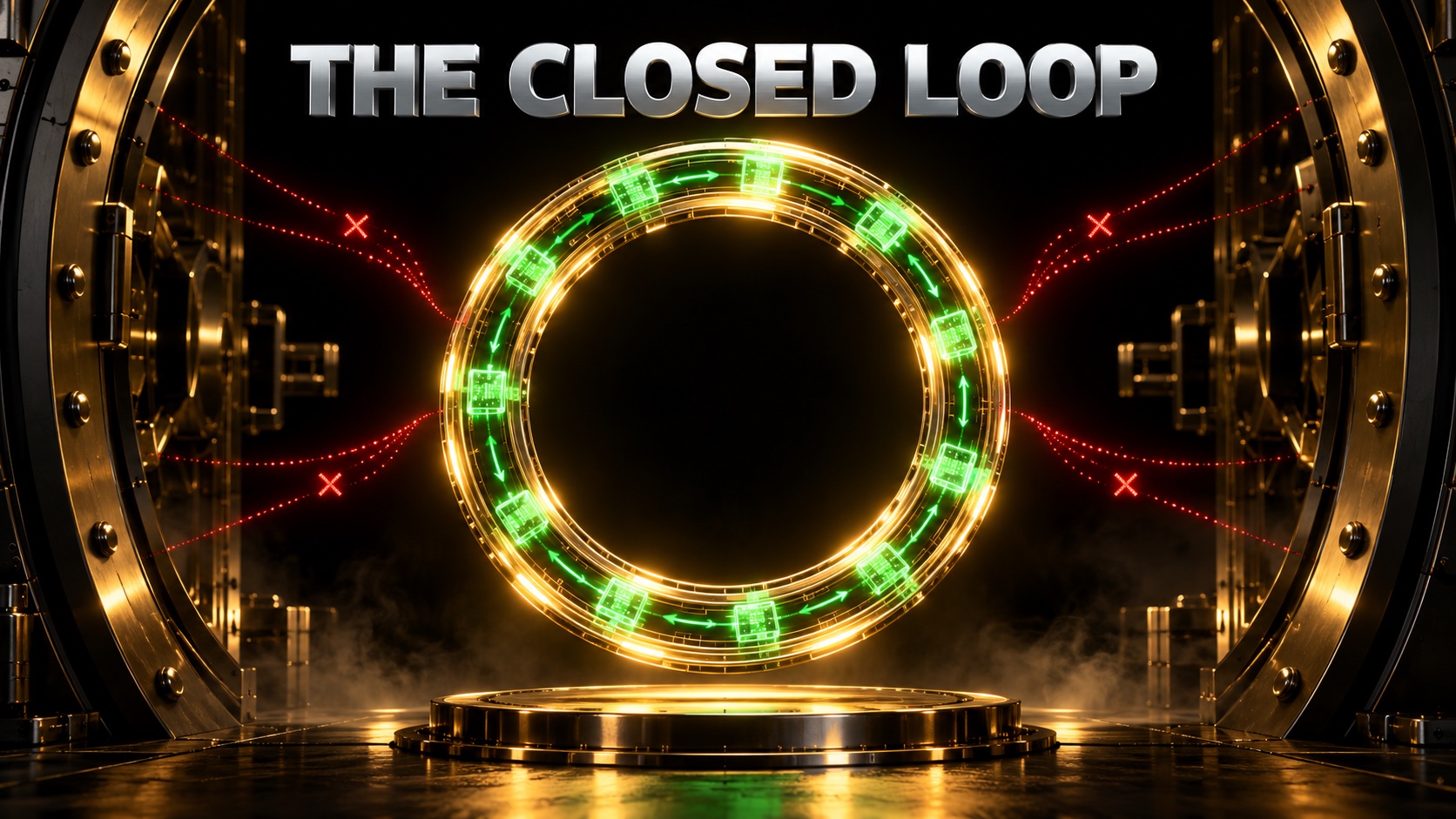
A closed loop means the trade, the custody and the settlement all happen inside one institution. The client never handles a private key, never connects to an outside exchange, and never sends coins across a blockchain to reach their own account. The bank’s announcement says this structure reduces exposure to third-party wallet risk.
For many wealthy investors, that is the whole point. Losing a seed phrase, sending funds to a wrong address, or trusting an exchange that later fails are the most common ways people lose crypto, and a closed loop removes most of them in one step. The holding also sits alongside the client’s other assets, for reporting and estate purposes, rather than on a separate platform.
What the closed loop gives up
The trade-off is control. In a closed loop, the bank holds the keys, which means the client holds a claim on the bank rather than coins they can move freely. Because the announcement does not address external transfers, anyone who values the ability to withdraw to self-custody should confirm that point directly with the bank before buying.
- You gain: no key management, no exchange counterparty, one regulated relationship
- You give up: direct control of the private keys, and possibly the freedom to move coins elsewhere
- You still carry: full Bitcoin and Ether price risk, which the bank does not reduce at all
If self-custody matters to you, our guide to Bitcoin cold wallet myths explains what holding your own keys really involves.
4. Part of a Systematic Digital Asset Build-Out
This launch is not a one-off. It is the latest step in a sequence the bank has been building for several years, moving from custody, to institutional trading, to wealth clients.
- September 2024: launched digital asset custody in the UAE
- July 2025: began deliverable spot Bitcoin and Ether trading for institutional clients through its UK branch, described as the first by a global systemically important bank (G-SIB)
- May 2026: announced, with Solowin Holdings (AXG), what it called Hong Kong’s first institutional crypto custody offered by a G-SIB
- 3 September 2026: extended institutional spot Bitcoin and Ether trading to the UAE through its DIFC entity, regulated by the Dubai Financial Services Authority
- October 2026: opened Bitcoin and Ether trading to UAE wealth clients
Before this launch, wealth clients could already reach crypto through ETFs on the bank’s cash equities platform, and through structured products and OTC derivatives. Standard Chartered, whose roots go back to the Chartered Bank founded in 1853, is moving those clients from indirect exposure to direct ownership.
The bank’s affiliated crypto businesses have a longer history still. Zodia Custody was launched by SC Ventures with Northern Trust in December 2020, and its sister company Zodia Markets, an institutional trading firm, was set up in 2021 as a partnership between SC Ventures and BC Technology Group, the parent of OSL.
5. Is a Bank Really Coming for Binance’s Business?
Binance’s Dubai entity, Binance FZE, received its full Virtual Asset Service Provider licence from VARA in April 2024. That licence lets it serve retail customers as well as qualified and institutional investors, offering spot trading and staking, with margin trading restricted to qualified users. On paper, both firms now sit under the same Dubai regulator. In practice, they are selling different products to different people.
| Feature | Standard Chartered (UAE wealth) | A major crypto exchange (Binance FZE) |
|---|---|---|
| Who can sign up | Professional Investors only | Retail, qualified and institutional users |
| Assets | BTC and ETH | Hundreds of tokens |
| Products | Spot buy and sell | Spot, staking, margin for qualified users |
| Custody | Bank-managed, closed loop | Exchange custody, with withdrawals to external wallets |
| Pricing | Not disclosed | Published fee schedules |
| Relationship | Part of a full banking and wealth relationship | Standalone trading account |
The thesis in the original note holds up well: this is not head-to-head competition. A client who needs AED 4 million in net assets to qualify, and who wants only Bitcoin and Ether held next to their bank deposits, was rarely a natural Binance power user. Exchange customers who want altcoins, staking, active trading or self-custody have no reason to move.
Where the overlap is real
The overlap is the wealthy, cautious buyer who has stayed out of crypto precisely because exchanges felt unfamiliar or risky. For that person, a bank account is a far easier first step. Every one of those clients the bank captures is a customer an exchange might eventually have won, so the competition is for new money at the top of the market, not for existing exchange users. If the service later reaches lower wealth tiers, that overlap widens.
Was it really a first?
The bank’s claim is specific: the first international bank in the UAE. Local lenders have moved too. In August 2026, RAKBANK Islamic began letting customers buy, sell and hold Bitcoin inside its mobile app, through the VARA-regulated broker Bitpanda Broker MENA DMCC, with published buy fees of 0.4% to 0.5% and a 0.5% sell fee. So the UAE bank channel was already open; Standard Chartered is the first global bank to join it.
6. The Wider Trend: Global Banks Moving Into Bitcoin
Standard Chartered is not alone. Strategy, the bitcoin treasury company, publishes a Bitcoin Banking Adoption Index that scores large global banks on how deeply they offer Bitcoin services. It launched at 32% on 13 July 2026 and rose to 34% in the third quarter. That figure is an overall engagement score, not the share of banks offering Bitcoin.
- Fidelity leads the index at 77%
- JPMorgan Chase scores 47% and BNY 46%
- Goldman Sachs and Morgan Stanley score 45% each
- Barclays scores 30%, Deutsche Bank 27% and MUFG 18%
Strategy attributes the rise to wider Bitcoin ETF access, more institutional custody, and growth in Bitcoin-backed lending. Banks are also pushing into direct trading for a broader public: in May 2026, Morgan Stanley began piloting Bitcoin, Ether and Solana trading on ETrade through Zerohash, at 50 basis points per trade, with all 8.6 million ETrade clients expected to gain access later in the year.
The pattern is consistent. Banks are offering crypto inside existing relationships, and on different terms to exchanges. For more on how big institutions are reshaping one of the two assets on offer here, see our Ethereum 2026 outlook, and for an equity angle on the same shift, our look at Robinhood’s crypto business.
7. Regulation and the Limits on Scale
The UAE’s appeal is a regulator that has written rules for almost every corner of the market. On 31 March 2026, VARA published a framework for crypto exchange-traded derivatives that caps retail leverage at 5 to 1, with a minimum initial margin of 20%. Rules like these are why a bank can build a product in Dubai with some confidence about where the lines are.

The harder limit is bank capital. The Basel Committee’s prudential standard for banks’ cryptoasset exposures entered the Basel Framework on 1 January 2026, and in February 2026 the Committee expedited a targeted review of parts of it, citing market developments. An update is promised later this year. How heavily the standard weighs on a service like this one depends on how the bank books client holdings, which it has not disclosed, but it is one reason banks expand crypto services carefully rather than quickly.
Standard Chartered has also connected to the wider tokenised finance world, including the bank-ledger and stablecoin projects we covered in our Open USD and Swift ledger explainer.
8. Bull vs Bear Case
🐂 Bull Case
- A G-SIB holding client Bitcoin and Ether directly gives cautious wealth investors a regulated path that did not exist before
- The bank has built in steps, from custody to institutional trading to wealth clients, which suggests this is a strategy, not an experiment
- The closed loop removes the key-loss and exchange-failure risks that keep many wealthy investors out of crypto
- The bank plans to extend the service to other markets, and the UAE launch is the template
- Rising bank adoption scores and launches at Morgan Stanley point to a growing, regulated demand channel for Bitcoin
🐻 Bear Case
- Professional Investor eligibility, with an AED 4 million net asset test, keeps the addressable market small
- Only BTC and ETH are offered, and fees, spreads and minimums are undisclosed, so cost cannot yet be compared
- The announcement does not say whether coins can leave the bank, which matters for anyone who values self-custody
- Basel capital rules remain under review, and tighter treatment could slow how far banks scale these services
- None of this changes the underlying risk: Bitcoin fell below $82,000 in launch week, and holders inside a bank feel that just as fully as holders on an exchange
9. Outlook: Coexistence, Not Takeover
For the next year, the most likely outcome is that banks and exchanges grow side by side. Banks will bring in older, wealthier and more cautious money that exchanges struggle to reach, while exchanges keep the active traders, the altcoin market and the self-custody crowd. That expands the pool of Bitcoin and Ether holders rather than splitting it.
Three things would change that view: the bank widening eligibility below Professional Investor level, publishing competitive fees, or allowing transfers out to external wallets. Any one of them would move the service much closer to a genuine exchange alternative. Follow OneMoreBitcoin on YouTube for regular crypto market updates.
FAQ
Can anyone in the UAE trade crypto with Standard Chartered?
No. The service is initially limited to clients classed as Professional Investors in the UAE. Standard Chartered’s UAE site says that classification requires declared net assets of AED 4 million, excluding the main residence, plus adequate investment knowledge and experience.
Which cryptocurrencies does Standard Chartered offer in the UAE?
Only Bitcoin and Ether. The bank has not said whether it will add other tokens.
Is Standard Chartered’s crypto service regulated?
Yes. The bank says it received approval from Dubai’s Virtual Assets Regulatory Authority (VARA) for the service. Its separate institutional trading service runs through its DIFC entity, regulated by the Dubai Financial Services Authority.
Can I withdraw my Bitcoin to my own wallet?
The announcement does not address this. It describes a closed-loop model in which the bank manages custody and settlement, so anyone who wants to move coins to self-custody should confirm the terms with the bank before buying.
Is Standard Chartered competing with Binance?
Only at the edges. Binance FZE serves retail, qualified and institutional users with many tokens and products, while Standard Chartered offers two assets to Professional Investors inside a bank account. The real overlap is new, wealthy buyers who have avoided exchanges until now.
Is buying Bitcoin through a bank safer than an exchange?
It removes some risks, such as losing your keys or an exchange failing, but not price risk. Bitcoin and Ether can fall sharply at any time, and crypto held through a bank is not a bank deposit.
Conclusion
Standard Chartered’s UAE launch matters because a global systemically important bank is now holding Bitcoin and Ether directly for wealth clients, under a crypto-specific regulator, inside the same account as their cash. Its biggest opportunity is the large pool of wealthy, cautious investors who have never opened an exchange account; its biggest limitation is how narrow it still is, with two assets, a high eligibility bar, undisclosed pricing and an unanswered question about withdrawals.
It is not a Binance killer. It is a second front door to the same market, built for a different customer, and if more banks follow, the long-term effect is likely more Bitcoin and Ether holders overall rather than fewer exchange users.
Disclaimer:
This article is for educational and informational purposes only. It does not constitute investment, financial, legal or tax advice, and it is not a recommendation to buy, sell or hold any digital asset.
Cryptocurrency is highly volatile and speculative. Prices can move sharply at any hour of any day, and you can lose some or all of the capital you invest. Digital assets are not bank deposits, they are generally not covered by deposit protection or investor compensation schemes, and the regulatory treatment of a token, platform or service can change quickly. Further risks include exchange or custodian failure, smart contract vulnerabilities, bridge and oracle failure, loss of private keys, and scheduled token unlocks that expand supply.
Investors should conduct their own due diligence and consider their own circumstances, time horizon and risk tolerance before making any financial decision. Consult a licensed financial adviser if you are unsure. Past performance is not indicative of future results.
OneMoreBitcoin and OneMoreMoney.com accept no responsibility for any loss incurred from reliance on the information provided in this article.