
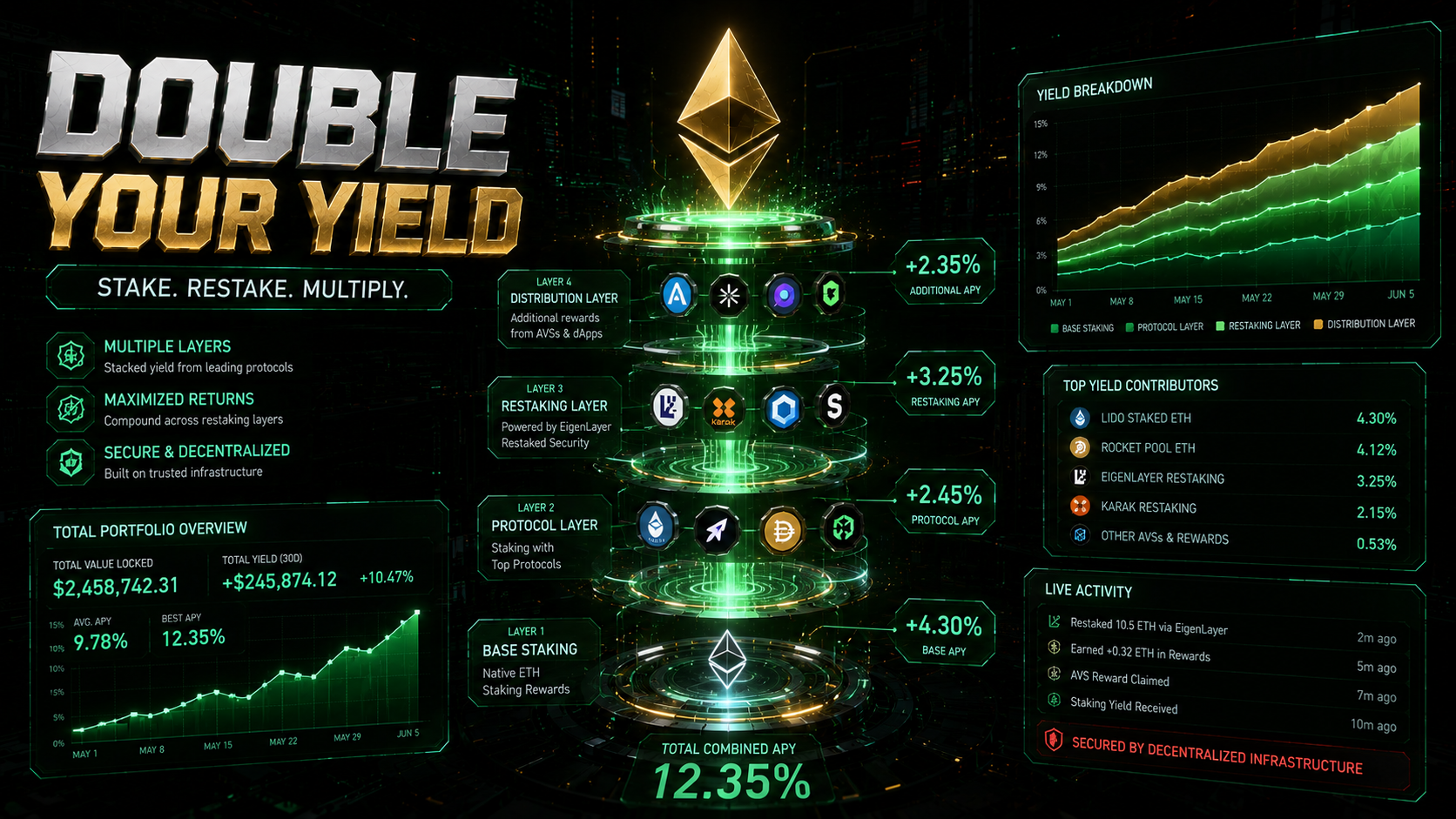
Crypto Restaking Guide: Double Your Yield with EigenLayer
The evolution of passive income in crypto has moved far beyond simple staking. In 2026, a new paradigm is emerging, one that allows investors to reuse the same capital multiple times to generate layered yields. This innovation is known as crypto restaking, and it is rapidly becoming one of the most talked-about opportunities in decentralized finance.
At the center of this movement is EigenLayer, a protocol built on Ethereum that introduces a powerful concept: economic security as a service. For passive income seekers, restaking represents the next step in capital efficiency, transforming idle assets into multi-layered income streams.
As highlighted in our Decentralized Wealth: The Definitive Guide to Blockchain Passive Income in 2026, the future of crypto investing is not just about holding assets, but about deploying them intelligently across yield-generating systems. Restaking is one of the most advanced expressions of that philosophy.
What Is Restaking? A Simple Explanation
To understand restaking, you first need to understand traditional staking. When you stake ETH, you lock it into the network to help validate transactions and secure the blockchain. In return, you earn rewards.
However, once your ETH is staked, it is typically “locked” in a single function, securing Ethereum.
Restaking changes this.
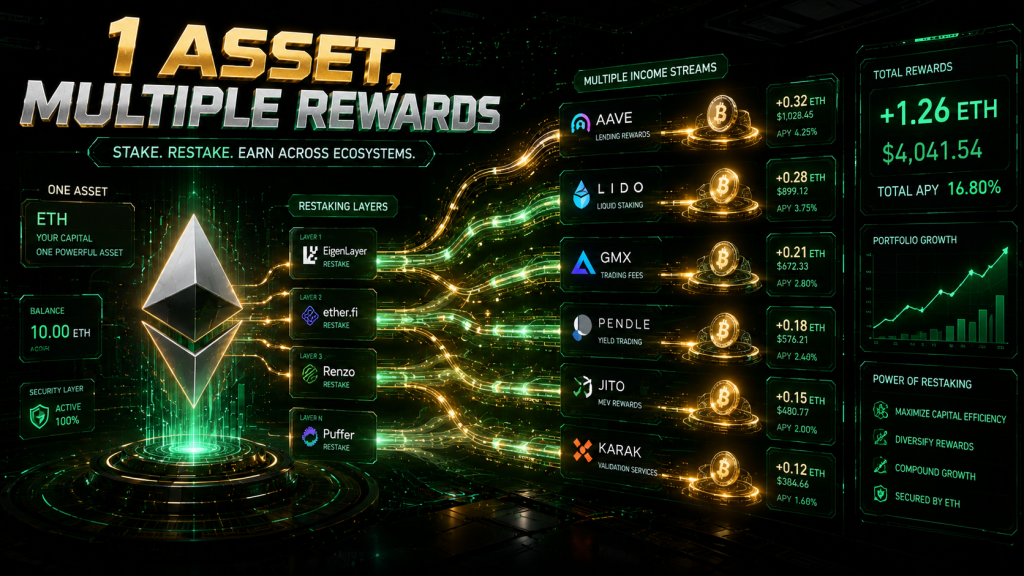
With restaking, your staked ETH can be reused to secure additional protocols, services, or applications built on top of Ethereum. This means your capital is no longer limited to a single yield source. Instead, it becomes a multi-purpose asset generating multiple streams of income simultaneously.
In simple terms:
- Staking = one yield source
- Restaking = multiple yield layers
This is why restaking is often described as “yield stacking” or “capital efficiency 2.0.”
How EigenLayer Works: The Engine Behind Restaking
EigenLayer enables restaking by allowing users to opt-in and extend the security of their staked ETH to other decentralized services.
These services, known as Actively Validated Services (AVSs), can include:
- data availability layers
- oracle networks
- cross-chain bridges
- decentralized middleware
Instead of each service building its own validator network from scratch, they can leverage Ethereum’s existing security through EigenLayer.
For users, this creates a new opportunity:
your staked ETH can now earn:
- Base Ethereum staking rewards
- Additional rewards from AVSs
This dual-layer reward system is what makes restaking so attractive.
However, it also introduces a new concept: shared risk. If one of the services you secure behaves maliciously or fails, your staked assets could be subject to slashing penalties.
Why Restaking Is a Game-Changer for Passive Income
Restaking fundamentally changes how capital works in crypto.
In traditional finance, capital is typically deployed in one place at a time. In DeFi 2.0, restaking allows capital to be reused across multiple layers without being withdrawn or redeployed.
This creates three major advantages:
1. Higher Capital Efficiency
Instead of earning 4–5% from staking alone, restaking allows investors to potentially increase yields by stacking additional rewards.
2. New Income Streams
Restaking introduces entirely new categories of yield tied to infrastructure services rather than just financial activity.
3. Ecosystem Growth
By providing shared security, restaking accelerates the development of new decentralized applications, which in turn creates more yield opportunities.
This is why many analysts consider restaking to be one of the most important innovations in the Ethereum ecosystem since staking itself.
The Risks of Restaking: What Beginners Must Understand
While the upside is compelling, restaking is not without risk. In fact, it introduces a new layer of complexity that investors must carefully navigate.
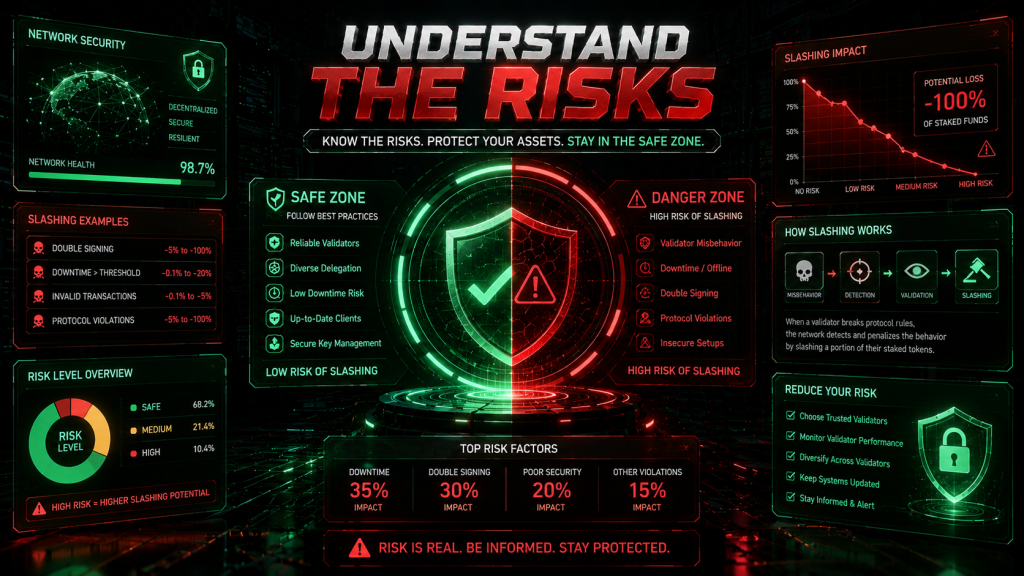
The most important risk is slashing risk amplification. When you restake your ETH, you are effectively committing it to multiple systems. If any of these systems fail or act maliciously, your assets could be penalized.
Other risks include:
- smart contract vulnerabilities
- protocol-level failures
- liquidity constraints
- over-leveraged yield expectations
For beginners, the key is to approach restaking with a risk-adjusted mindset rather than chasing maximum yield.
This aligns directly with the OneMoreMoney philosophy:
protect capital first, then optimize returns.
Liquid Staking + Restaking: The Ultimate Combination
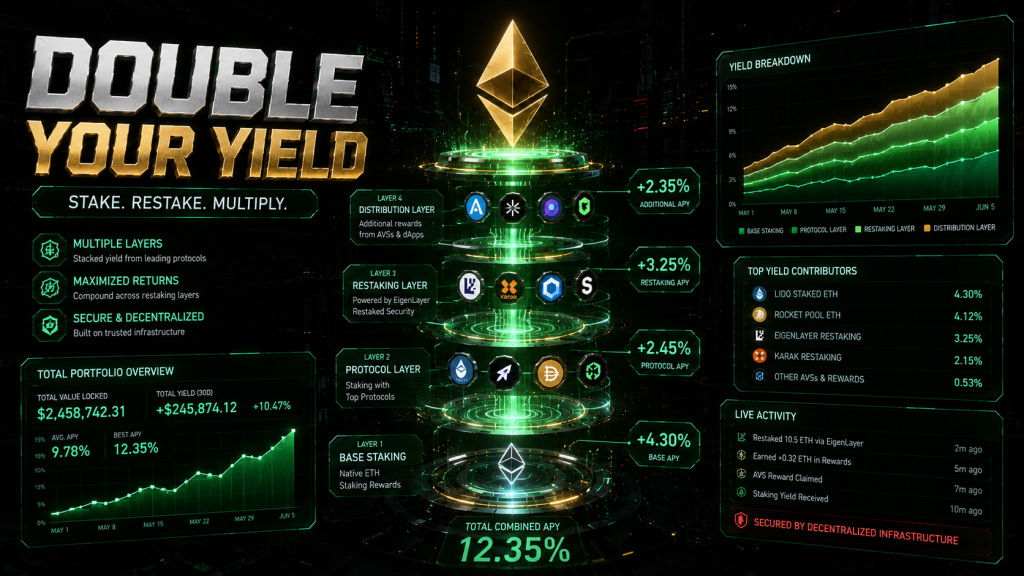
One of the most powerful strategies emerging in 2026 is the combination of liquid staking with restaking.
Platforms like Lido allow users to stake ETH while receiving liquid tokens such as stETH. These tokens can then be restaked through EigenLayer or integrated into other DeFi strategies.
This creates a layered system:
- Layer 1: ETH staking rewards
- Layer 2: Restaking rewards
- Layer 3: DeFi yield from using liquid tokens
The result is a highly efficient income-generating structure where a single asset can produce multiple streams of return.
However, each additional layer also increases complexity and risk. Understanding these trade-offs is essential for long-term success.
Restaking Beyond EigenLayer: The Expanding Ecosystem
While EigenLayer is the pioneer, the restaking concept is rapidly expanding across the blockchain ecosystem.
New protocols are exploring:
- restaking on other blockchains
- modular security layers
- cross-chain restaking models
This indicates that restaking is not just a single trend, but a foundational shift in how blockchain security and yield generation are structured.
As adoption grows, we can expect:
- more diversified yield opportunities
- increased competition among protocols
- improved risk management tools
For investors, this means the opportunity set will continue to expand, but so will the need for informed decision-making.
Building a Cypto Restaking Strategy for Passive Income
For those looking to incorporate restaking into their passive income portfolio, a structured approach is essential.
Rather than allocating all capital to restaking, it should be viewed as a high-efficiency layer within a diversified system.
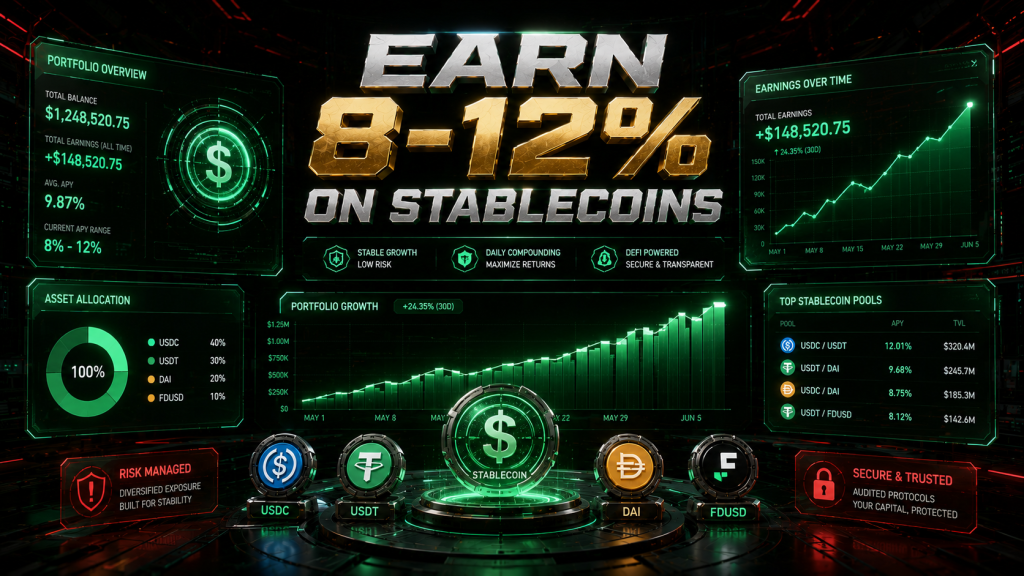
A balanced approach may include:
- core holdings in ETH for long-term growth
- staking for baseline yield
- selective restaking for enhanced returns
- stablecoin strategies for income stability
This integrated system aligns with the broader decentralized wealth framework, where multiple income streams work together to create sustainable returns.
The Role of AI in Crypto Restaking Optimization
As restaking becomes more complex, AI tools are playing an increasingly important role in optimizing strategies.

AI-driven systems can:
- evaluate risk across multiple protocols
- identify optimal yield opportunities
- rebalance allocations dynamically
- detect early warning signals
This integration of AI and DeFi is a key trend for 2026 and beyond.
For passive income seekers, it represents the next evolution:
from manual strategy management → to automated, intelligent income systems.
Final Thoughts: Crypto Restaking as the Future of Crypto Yield
Restaking is more than just a new feature, it is a redefinition of how capital operates in decentralized systems.
By enabling assets to secure multiple layers of infrastructure simultaneously, it unlocks a level of efficiency that was previously impossible.
However, with greater efficiency comes greater responsibility. Investors must understand the risks, evaluate protocols carefully, and avoid the temptation to chase unsustainable yields.
For those who approach it with discipline, restaking offers a powerful opportunity to enhance passive income and participate in the next phase of blockchain innovation.
The future of crypto wealth is not just about owning assets, it is about deploying them intelligently across systems that generate continuous value.
Restaking is one of the clearest signals of where that future is heading
4. FAQ Section
Q1: What is crypto restaking?
Restaking allows you to reuse staked assets to secure multiple protocols and earn additional rewards.
Q2: Is EigenLayer safe to use?
It is still an emerging protocol, so while promising, it carries risks such as smart contract vulnerabilities and slashing.
Q3: How much can I earn from restaking?
Returns vary, but restaking can enhance traditional staking yields depending on the protocols involved.
Q4: Do I need a lot of ETH to start?
No, liquid staking platforms allow smaller investors to participate.
Q5: Is restaking suitable for beginners?
It can be, but beginners should start small and focus on understanding risks before scaling.