
Introduction: Why DePIN Could Become One of Crypto’s Biggest Passive Income Trends
For many cryptocurrency investors, passive income traditionally meant staking Ethereum, yield farming stablecoins, or lending digital assets on decentralized finance protocols. While these opportunities remain attractive, a new sector has quietly emerged over the past two years that could potentially become one of the most transformative investment themes in blockchain.That sector is Decentralized Physical Infrastructure Networks, more commonly known as DePIN projects.
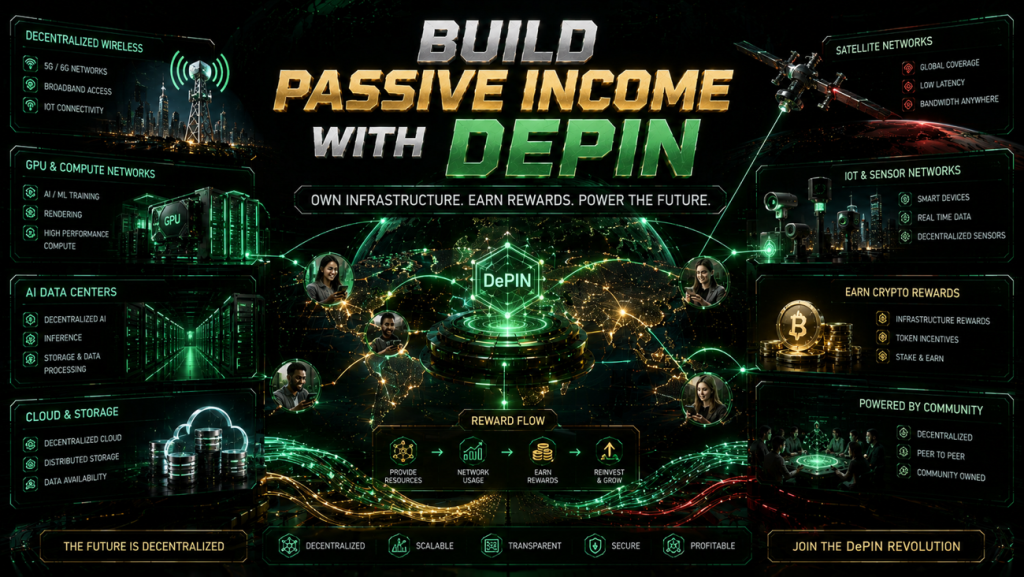
DePIN represents an ambitious attempt to decentralize the ownership and operation of real-world infrastructure by rewarding participants with cryptocurrency incentives. Instead of relying on centralized corporations to build wireless networks, data storage centers, mapping systems, GPU clusters, or energy grids, DePIN projects distribute these responsibilities among thousands of individuals worldwide.
Participants contribute hardware, bandwidth, storage capacity, computational resources, or data collection capabilities in exchange for token rewards. For passive income seekers, this opens an entirely new category of crypto yield generation that moves beyond traditional staking and speculative trading.
As discussed extensively in our cornerstone article, “Decentralized Wealth: The Definitive Guide to Blockchain Passive Income in 2026,” the future of blockchain investing increasingly revolves around owning productive digital assets rather than merely holding volatile cryptocurrencies.
DePIN may represent one of the clearest examples of that shift.
Understanding the DePIN Revolution
Traditional infrastructure businesses are notoriously capital intensive. Building cellular towers, cloud data centers, mapping systems, and AI compute facilities typically requires billions of dollars in upfront investments.
Blockchain technology changes this equation.
DePIN projects leverage token incentives to coordinate distributed communities willing to contribute infrastructure resources. Instead of a corporation owning all hardware assets, ownership becomes fragmented among thousands of independent participants.
This creates several advantages.
Infrastructure expansion becomes significantly cheaper.
Networks scale organically.
Participants share economic upside.
Communities become stakeholders.
Artificial intelligence has also become a major catalyst for DePIN adoption.
AI applications require enormous amounts of GPU computing power, storage resources, and data collection capabilities. DePIN projects increasingly provide decentralized alternatives to expensive centralized cloud providers.
The convergence between AI and blockchain may become one of the most powerful investment narratives over the next decade.
Why DePIN Appeals to Passive Income Investors
Passive income investors are always searching for assets capable of producing recurring cash flow without requiring constant management.
DePIN introduces an interesting hybrid model.
Unlike dividend stocks, participants may receive cryptocurrency rewards.
Unlike yield farming, rewards are often tied to real-world utility.
Unlike speculative meme coins, economic activity frequently stems from genuine infrastructure demand.
Some networks require users to purchase specialized hardware.
Others allow participation using existing internet connections or computing resources.
Although returns vary considerably, many investors view DePIN as a potential long-term infrastructure investment theme rather than simply another cryptocurrency trend.
For investors building diversified blockchain income portfolios, DePIN can complement traditional staking strategies, stablecoin lending programs, and tokenized real-world assets.
Project Number One: Helium
Among all DePIN projects, few are as recognizable as Helium.
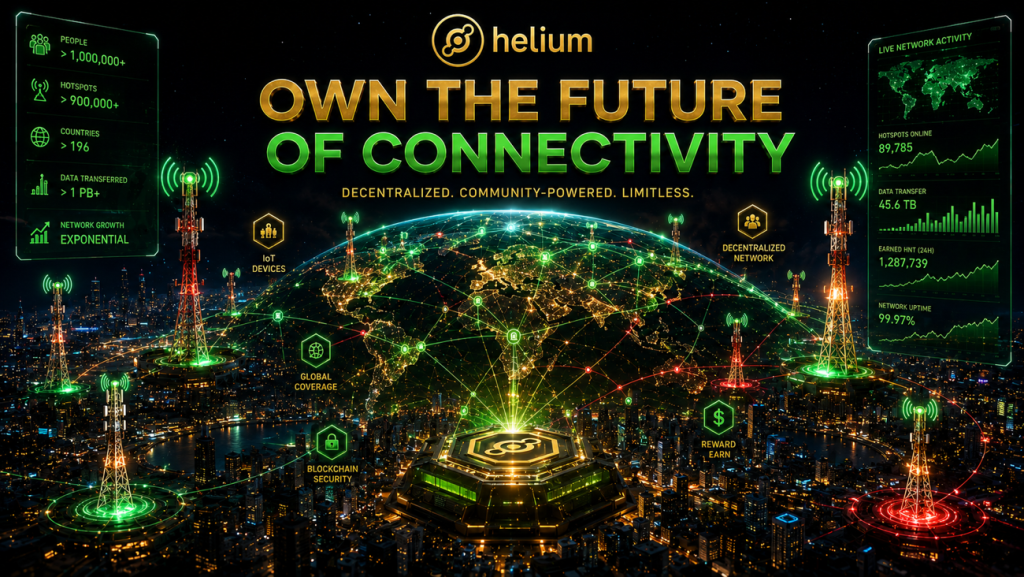
Helium originally aimed to build decentralized wireless connectivity through community-owned hotspots.
Instead of relying exclusively on telecommunications giants, Helium incentivizes individuals to deploy wireless infrastructure and earn rewards.
Over time, the project expanded significantly.
The ecosystem now supports IoT devices.
5G networks.
Enterprise applications.
Smart city deployments.
Asset tracking solutions.
One of Helium’s biggest strengths lies in its established ecosystem. The network already operates thousands of hotspots globally, providing tangible evidence that decentralized telecommunications infrastructure can function at scale.
Although hardware deployment requires upfront investment, Helium remains one of the most mature DePIN opportunities available today.
Passive income investors interested in infrastructure ownership often view Helium as the equivalent of owning digital cell towers.
Project Number Two: Render Network
Artificial intelligence is creating unprecedented demand for graphics processing units.
Render Network attempts to solve this problem.
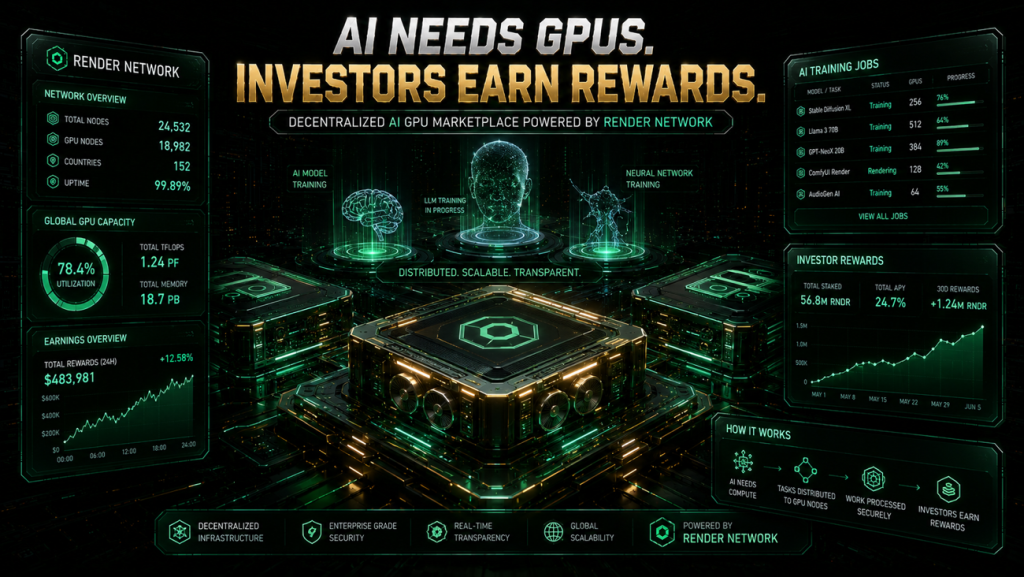
The platform connects creators, AI developers, studios, and enterprises with decentralized GPU providers.
Users who possess idle GPU capacity can rent out computational resources and receive token rewards.
As generative AI applications continue expanding, GPU shortages have become increasingly common.
Cloud providers frequently struggle to satisfy demand.
Render offers an alternative marketplace where computing power can be monetized efficiently.
For investors bullish on artificial intelligence, Render arguably represents one of the strongest intersections between AI and blockchain infrastructure.
The growth potential remains substantial if AI inference workloads continue accelerating over the next several years.
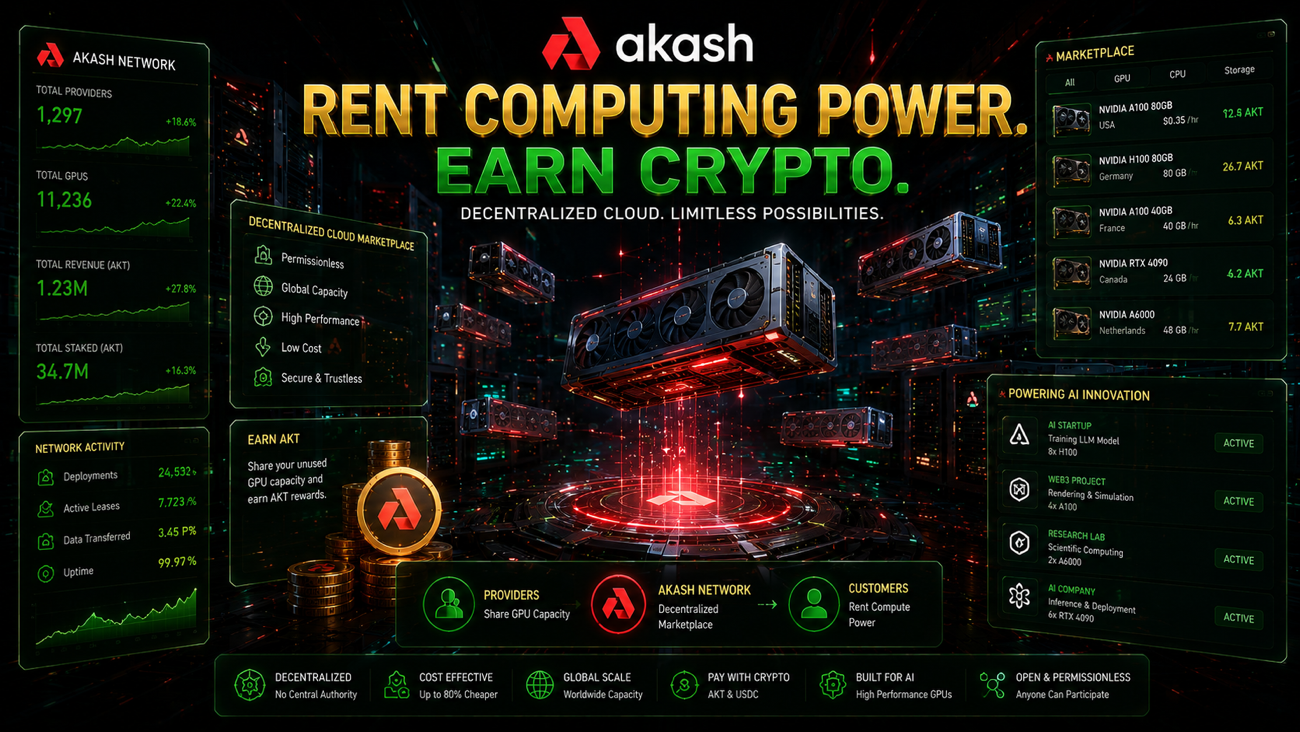
Project Number Three: Akash Network
Akash is often described as a decentralized version of traditional cloud computing providers.
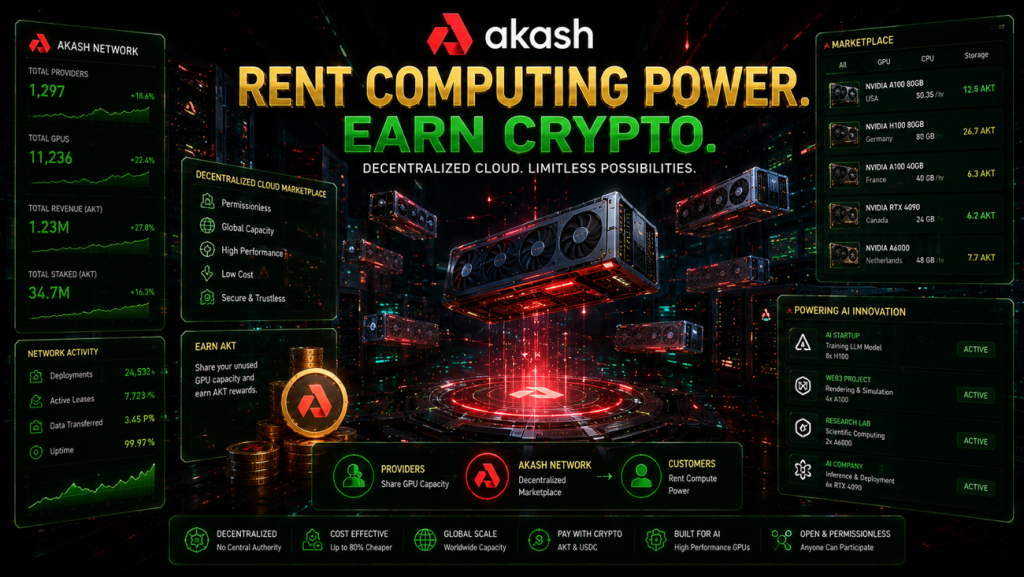
Companies typically rely on centralized services for server hosting.
Akash seeks to decentralize this model.
Participants with spare computing capacity can lease infrastructure to businesses and developers.
Demand has increased considerably due to AI startups searching for affordable GPU resources.
Training large language models remains extremely expensive.
Akash offers a marketplace designed to reduce those costs.
For passive income investors who already operate servers or possess high-performance computing equipment, Akash creates an additional monetization opportunity.
The network benefits from increasing AI adoption trends while simultaneously contributing toward decentralization efforts.
Project Number Four: Hivemapper
Maps represent one of the most valuable digital assets in modern technology.
Autonomous vehicles.
Delivery companies.
Logistics providers.
Navigation applications.
AI agents.
All depend heavily upon continuously updated geographic data.
Hivemapper decentralizes map generation.
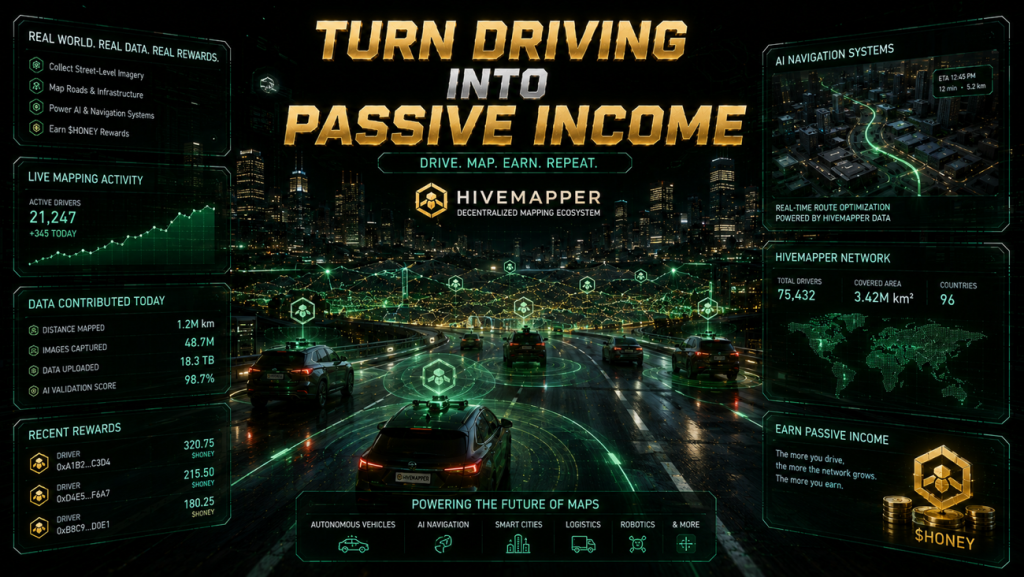
Drivers install dashcams.
Road footage is uploaded.
Contributors earn token rewards.
Traditional mapping providers update information relatively slowly.
Hivemapper allows communities to collect mapping data in real-time.
This decentralized approach significantly lowers operational costs while improving coverage.
For individuals who drive frequently, Hivemapper effectively transforms ordinary commuting activities into monetizable digital labor.
Project Number Five: Grass
Grass has quickly attracted significant attention within crypto communities.
Its business model is relatively straightforward.
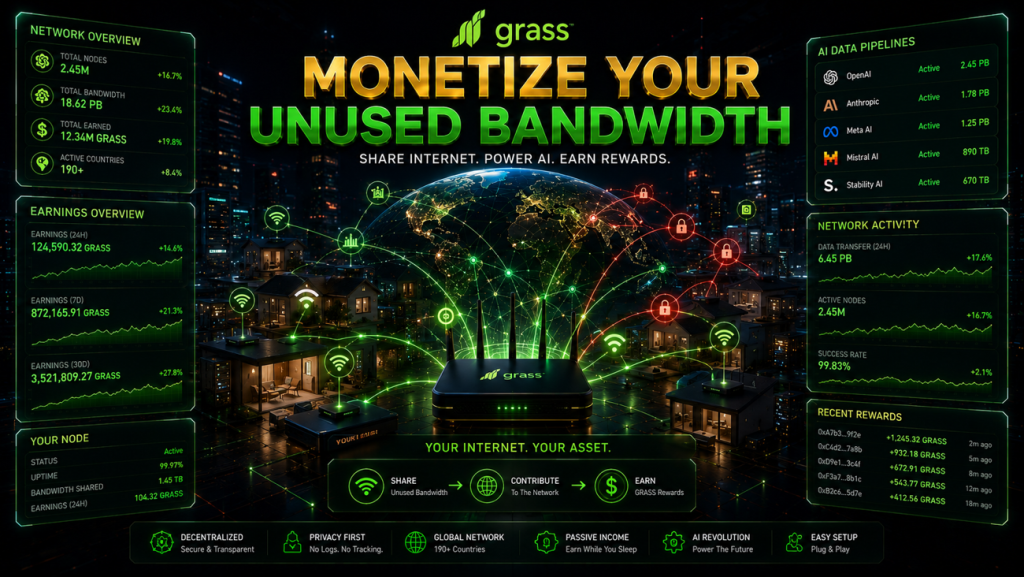
Users share unused internet bandwidth.
Companies conducting AI model training purchase access to publicly available web data.
Participants receive rewards.
The concept resonates strongly with passive income seekers because hardware requirements remain minimal.
Most users simply install software and contribute excess bandwidth.
As demand for training datasets continues growing, projects like Grass could potentially become important components of AI infrastructure ecosystems.
Although newer than some competitors, Grass demonstrates how DePIN models continue evolving rapidly.
Evaluating Risks Before Investing in DePIN
Despite the attractive narrative, investors should maintain realistic expectations.
DePIN remains an emerging sector.
Token prices remain volatile.
Adoption uncertainty persists.
Hardware investments can take years to recover.
Regulatory developments may also influence long-term economics.
Before committing capital, investors should evaluate several factors carefully.
Network utilization.
Revenue generation.
Token inflation schedules.
Community growth.
Hardware depreciation.
Competitive positioning.
The best DePIN investments typically exhibit genuine demand for their services rather than relying exclusively on speculative token appreciation.
Why DePIN May Fit the OneMoreMoney Philosophy
OneMoreMoney focuses heavily on owning productive assets capable of generating recurring value.
DePIN aligns naturally with that philosophy.
Participants become infrastructure owners.
Rewards derive from utility.
Income streams can diversify traditional investment portfolios.
Investors might combine:
Stablecoin yields.
Restaking strategies.
Dividend stocks.
AI newsletters.
Affiliate businesses.
Copy trading.
DePIN infrastructure rewards.
This approach creates multiple income sources while reducing reliance on traditional employment.
As artificial intelligence expands globally, demand for decentralized storage, GPU clusters, wireless networks, and mapping systems may increase substantially.
DePIN provides investors with early exposure to those trends.
Final Thoughts
DePIN represents one of the most fascinating developments within the blockchain industry.
Rather than speculating purely on token prices, investors gain opportunities to participate in building real-world infrastructure networks.
Helium.
Render.
Akash.
Hivemapper.
Grass.
Each offers unique exposure to emerging sectors including telecommunications, AI computing, cloud services, geospatial intelligence, and data acquisition.
While risks certainly remain, DePIN has the potential to evolve into an entirely new asset class where blockchain participants earn passive income by owning pieces of tomorrow’s digital infrastructure.
For passive income seekers willing to think beyond traditional staking and yield farming, DePIN deserves close attention in 2026 and beyond.
FAQ about DePIN
Q1. What is DePIN?
DePIN stands for Decentralized Physical Infrastructure Networks, where participants contribute real-world resources such as bandwidth, storage, GPUs, or wireless coverage in exchange for token rewards.
Q2. Can DePIN generate passive income?
Yes. Many DePIN projects reward users for operating hardware, sharing internet bandwidth, or providing computing resources.
Q3. Which DePIN project is most closely linked to AI?
Render, Akash, and Grass currently have the strongest ties to AI infrastructure and machine learning demand.
Q4. Is DePIN safer than yield farming?
Generally, DePIN rewards often stem from real infrastructure demand, but token volatility and hardware costs still present risks.
Q5. Is DePIN suitable for beginners?
Some projects such as Grass are beginner-friendly, while others require upfront hardware purchases and technical setup.
Sources
- Helium, Helium documentation
- Render Network, Render Network
- Akash Network, Akash Network documentation
- Hivemapper, Hivemapper documentation
- Grass, Grass
Disclaimer: This article is for educational purposes only and does not constitute investment advice. Crypto assets and leveraged trading carry a high risk of loss. Investors should conduct their own due diligence before making any financial decisions. We are not responsible for any investment losses incurred based on the information provided in this article.