
In the evolving landscape of digital finance, tokenized real estate (Real World Assets – RWA) is emerging as a new way to own a slice of rental property. By combining blockchain technology with traditional property investing, investors can now access fractional ownership, scheduled rental payouts, and global diversification, all without the complexities of direct property management.

As AI continues to dominate financial markets, smart investors are leveraging data-driven platforms, automation tools, and tokenized assets to earn rental income from property they could not buy outright. This guide explains how it works, what returns look like after costs, and the risks to check first.
What is Tokenized Real Estate (RWA)?
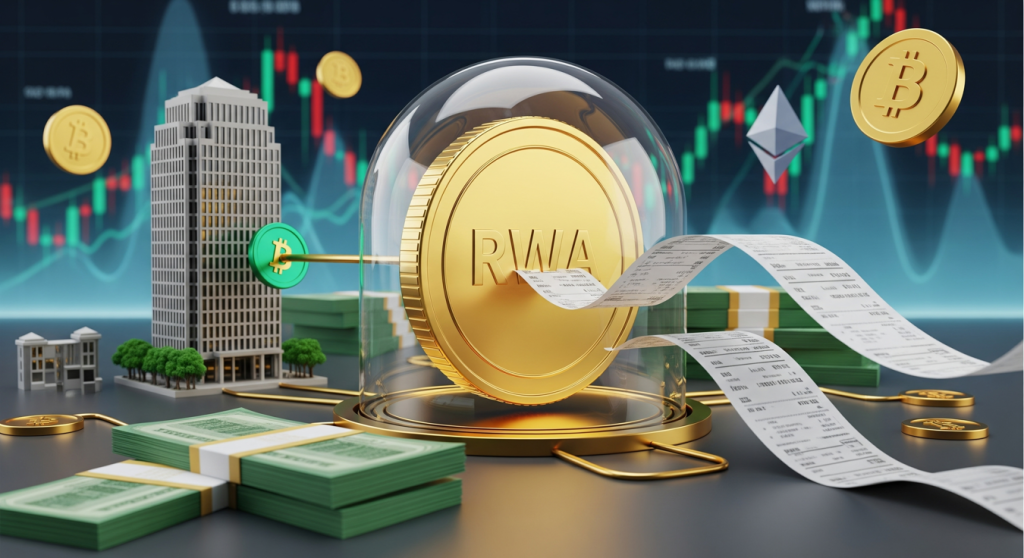
Tokenized real estate refers to the process of converting ownership of physical property into digital tokens on a blockchain. Each token represents a fractional share of the property, allowing investors to:
- Earn rental income proportionally
- Trade ownership easily
- Access global real estate markets
Unlike traditional real estate investing, which requires large capital and active management, RWA platforms allow you to start with relatively small investments while still earning a share of the rental income.
Why Investors Use Tokenized Real Estate for Income
1. Regular Rental Payouts
Most tokenized real estate platforms distribute rental income monthly or quarterly. This creates a predictable passive income stream similar to dividends, although payments vary with occupancy, repairs and fees.
2. Fractional Ownership = Lower Barrier to Entry
Instead of buying a $300,000 property, you can invest as little as $50–$500 into multiple properties across different regions.
3. AI-Driven Asset Selection
Modern platforms integrate AI analytics to:
- Identify high-yield properties
- Predict rental demand
- Optimize portfolio allocation
This significantly reduces the research burden for investors.
4. Liquidity Advantage
Unlike traditional real estate, tokenized assets can often be traded on secondary markets, although trading volume on many tokens is thin.
How to Earn Monthly Passive Income (Step-by-Step)
Step 1: Choose a Reliable RWA Platform
Look for platforms that offer:
- Transparent asset backing
- Regulatory compliance
- Proven track record
Examples include platforms specializing in U.S. rental properties, commercial real estate, or emerging markets.

Step 2: Diversify Across Multiple Properties
Avoid concentrating your investment in a single property. Instead:
- Allocate funds across residential, commercial, and short-term rentals
- Diversify geographically (US, Europe, Asia)
This reduces risk and stabilizes income.
Step 3: Focus on Yield + Appreciation
A professional investor doesn’t just chase yield. Look for:
- Net rental yield after fees, vacancies and repairs, not just the advertised gross yield
- Capital appreciation potential
The combination creates both income plus potential long-term growth.
Step 4: Automate with AI Tools
In the AI-driven era, much of the monitoring can be automated. Use:
- Portfolio tracking dashboards
- AI allocation tools
- Automated reinvestment strategies
This allows you to compound earnings with less manual effort.
Step 5: Reinvest Monthly Income
To scale your passive income:
- Reinvest rental payouts into new properties
- Use compounding to accelerate growth
Over time, this creates a compounding effect, although growth depends on the properties performing as expected.
Realistic Income Expectations
Here is what different net yields would mean on a $10,000 investment. This is simple arithmetic to show scale, not a forecast:
| Investment | Net yield (after costs) | Monthly income, before tax |
|---|---|---|
| $10,000 | 4% | ~$33 |
| $10,000 | 6% | ~$50 |
| $10,000 | 8% | ~$67 |
Platforms often advertise gross yields in the high single digits, but net payouts after property tax, insurance, repairs, vacancies and platform fees are lower, and an individual property can pay nothing for months while it is empty or being repaired. Because payouts come from rent rather than token prices, they can be steadier than most crypto yields, but they are not guaranteed.
Risks You Must Understand
No investment is risk-free. Key risks include:
1. Platform Risk
If the platform fails, your investment may be affected. Always choose reputable providers.
2. Regulatory Uncertainty
RWA is still evolving, and regulations may change depending on your jurisdiction.

3. Property Market Risk
Rental income depends on:
- Occupancy rates
- Local market conditions
4. Liquidity Risk
Not all tokenized assets have active secondary markets.
5. Legal Ownership Risk
Token holders usually own a share of a legal entity, such as an LLC, that holds the property, rather than the property itself. Before investing, check what the token legally entitles you to, who manages the entity, and what happens to your share if the platform shuts down.
AI + RWA: Where the Market Is Heading
The integration of AI into tokenized real estate is transforming the investment landscape:
- AI property valuation models improve accuracy
- Predictive analytics optimize rental yield
- Automated portfolio rebalancing enhances returns
This convergence of AI and blockchain is creating a new asset class that is:
- Accessible
- Scalable
- Efficient
For passive income investors, this is a significant development worth understanding, while the market is still young.
Final Thoughts
Tokenized real estate is not just a trend, it’s a structural shift in how people invest in property. By combining blockchain ownership, AI optimization, and global access, investors can now earn rental income with far less capital than buying a property outright.
If approached professionally, with diversification, risk management, and reinvestment, this strategy can become a core pillar of your passive income portfolio in the AI era.

FAQ Section
What is tokenized real estate?
Tokenized real estate is property ownership divided into blockchain-based tokens, allowing fractional investment and passive income.
Is tokenized real estate safe?
It depends on the platform, regulatory compliance, and property quality. Always conduct due diligence.
How much income can I expect?
It depends on the property’s net rental yield after fees, vacancies and repairs. At a 6% net yield, $10,000 would pay about $50 a month before tax, but payouts vary and are not guaranteed.
Do I need large capital to start?
No. Many platforms allow entry with as little as $50–$500.
Is this better than crypto staking?
Tokenized real estate is generally more stable, as it is backed by physical property, but it carries platform, legal-ownership and liquidity risks that crypto staking does not.
Sources
- Bank for International Settlements, Annual Economic Report 2025, Chapter III: The next-generation monetary and financial system: tokenisation of real-world assets
- RWA.xyz: market data on tokenized real-world assets
- U.S. SEC Investor.gov, Real Estate Investment Trusts (REITs): the traditional way to own a share of rental property
- Nareit, What is a REIT?
Disclaimer: This article is for educational purposes only and does not constitute investment advice. Investors should conduct their own due diligence before making any financial decisions. We are not responsible for any investment losses incurred based on the information provided in this article.